Radiation Effects and Events Hub
Radiation Effects & Events Advocacy
The events described throughout this website and chronicled in many referenced archives have demonstrably harmed various groups. For example, atomic bomb testing in the former USSR (now Kazakhstan) irradiated local villages, exposing the population to the impacts of nuclear fallout. This resulted in the development of the Nevada-Semipalatinsk movement, an anti-nuclear movement that focused on closing the Semipalatinsk Nuclear Testing Site as well as other nuclear testing sites internationally (Irvine 2024). Yet the Nevada-Semipalatinsk movement is not the only anti-nuclear advocacy movement that resulted from nuclear development. Indigenous populations were disproportionately impacted by the US government's nuclear testing, resulting in a variety of awareness efforts (Nuclear Princeton).
Here, we highlight the advocacy efforts of the Nevada-Semipalatinsk Movement and the impact of nuclear testing on indigenous populations. Additionally, other advocacy groups working in this field are linked below.
The Nevada-Semipalatinsk Movement
In the 1950s and 60s, the government of the former Soviet Union bombarded the steppes of modern-day Kazakhstan with nuclear testing trials that occurred both above and below ground (Yan 2019). Nearby villages were irradiated, and the health impacts of nuclear testing have been passed down through generations, contributing to increased cancer incidence in irradiated individuals and potentially elevated blood pressures in their offspring. While impacted populations have been studied, it remains difficult to fully grasp the potential impacts of this radiation due to intense secrecy surrounding the initial nuclear

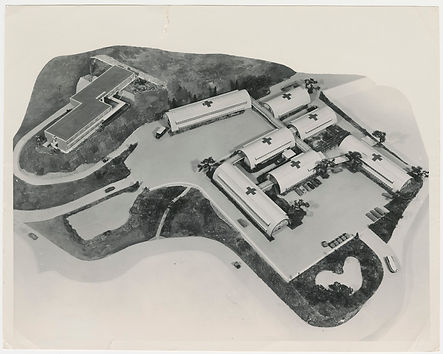
Photo above: Randall Wright papers on Kazakhstan health care; MS 224; John P. McGovern Historical Collections and Research Center, Houston Academy of Medicine-Texas Medical Center Library. Semipalatinsk program materials, Folder 1.6.
testing. The Nevada-Semipalatinsk movement itself was founded in 1989 and helped to close nuclear testing sites in modern-day Kasakhstan and other countries. The Nevada-Semipalatinsk movement occurred in conjunction with similar anti-nuclear movements, including but not limited to the United States Comprehensive Test Ban Coalition, the International Society for Human Rights, and the International Physicians for the Prevention of Nuclear War (Irvine 2024). According to a 2024 article written by Emily Irvine for the Wilson Center, many Western media outlets covered the Semi-Palatinsk movement favorably. This is particularly unusual since at the time anti-nuclear sentiment was not popularly expressed in the United States. The Nevada-Semipalatinsk movement was a grassroots movement that depended heavily upon local and international support. For example, one document from the personal papers of Matthew Evangelista, linked here, provides a short description of simultaneous demonstrations that occurred in Kazakhstan, Germany, Japan, and the USA against ongoing nuclear testing in early August 1989.
Further information about the Nevada-Semipalatinsk movement is available in the Wilson Center's Digital Archive, particularly in the collection titled "Personal Papers of Matthew Evangelista." The Wilson Center has other related collections, including collections on other anti-nuclear peace movements, as well as other related materials about the Nevada-Semipalatinsk movement.
Sources:
-
Irvine, Emily. “The Nevada-Semipalatinsk Movement and the International Citizens’ Congress for a Nuclear Test Ban | Wilson Center,” January 17, 2024. https://www.wilsoncenter.org/blog-post/nevada-semipalatinsk-movement-and-international-citizens-congress-nuclear-test-ban.
-
Personal Papers of Matthew Evangelista, Folder: "International Citizens Congress for a Nuclear Test Ban, Alma Ata '90."
-
Yan, Wudan. “The Nuclear Sins of the Soviet Union Live on in Kazakhstan.” Nature 568, no. 7750 (April 3, 2019): 22–24. https://doi.org/10.1038/d41586-019-01034-8.

Impact of Nuclear Testing on Indigenous Populations
From the 1940s to the 1990s, the US government conducted nuclear testing, often in areas of the southwestern US. Many nuclear tests therefore took place in places with high proportions of Native American residents, fueling a disproportionate impact of nuclear testing on Indigenous residents. Testing was not limited to the southwest United States. In a 2020 article written by Baskut Tuncak (an expert in human rights implications of "environmentally sound management and disposal of hazardous substances and wastes" [United Nations, 2020]) for the United Nations, Tuncak describes further testing that occurred in the Marshall Islands, French Polynesia, and Alaska. Tuncak explicitly references the discriminatory nature of said testing, stating:
"The Indigenous Peoples of the United States continue to bear tremendous environmental health impacts of radioactive waste, such as the uranium waste heaped on the lands and territories of the Navajo Nation... Seventy-five years after the Trinity test, the hazards of nuclear testing remain a chronic persistence in lives of many innocent victims. States must provide an adequate, acceptable and long-lasting solution to such situations to meet their duty to secure access to justice and effective remedies. The discriminatory nature of nuclear testing should be acknowledged and addressed as part of the ongoing conversation on systemic racism and nuclear disarmament."
- Baskut Tuncak, "75th anniversary of the Trinity nuclear tests, 16 July 2020," United Nations Human Rights Website
The discriminatory nature of nuclear testing as executed by the US government was exemplified even from its first nuclear test (titled "Trinity") in southeastern New Mexico, as this test took place near a number of Native pueblo communities and the Mescalero Apache Reservation (Nuclear Princeton, "Trinity Test Site"). Further testing occurred in Nevada on Western Shoshone and Southern Paiutes territory, exposing primarily Native American populations to significant amounts of radiation (Nuclear Princeton, "Nevada Test Site," and Frohmberg et al, 2000). Efforts to bring awareness to these tests and their continual impact on Indigenous communities are ongoing. "Downwind," a documentary film released in 2023, is one example of this awareness effort. The film chronicles the nuclear bomb tests that occurred at the Nevada test sites and their impact on Native American communities (Karabaic and Szeto, 2024).
Sources:
-
Alamalhodaei, Aria. “Communities in the American Southwest Were Exposed to Nuclear Fallout. Can They Get Compensated?” Mother Jones (blog). Accessed April 29, 2024. https://www.motherjones.com/politics/2019/08/communities-in-the-american-southwest-were-exposed-to-nuclear-fallout-can-they-get-compensated/.
-
Boyle, Nate. Fronteras. “Some Arizona ‘downwinders’ Exposed to Nuclear Test Radiation Still Struggle for Compensation,” March 24, 2023. https://fronterasdesk.org/content/1842199/some-arizona-downwinders-exposed-nuclear-test-radiation-still-struggle-compensation.
-
Frohmberg, Eric, Robert Goble, Virginia Sanchez, and Dianne Quigley. “The Assessment of Radiation Exposures in Native American Communities from Nuclear Weapons Testing in Nevada.” Risk Analysis : An Official Publication of the Society for Risk Analysis 20 (March 1, 2000): 101–11. https://doi.org/10.1111/0272-4332.00010.
-
Jodie. “Impacts of Radiation from Aboveground Nuclear Tests on Southern Utah.” Utah Department of Environmental Quality, August 13, 2019. https://deq.utah.gov/public-interest/impacts-of-radiation-from-aboveground-nuclear-tests-on-southern-utah.
-
Karabaic, Lillian, and Winston Szeto. “Documentary ‘Downwind’ Shows Deadly Consequences of Nuclear Testing on Tribal Lands.” opb. Accessed April 29, 2024. https://www.opb.org/article/2024/01/21/documentary-downwind-nuclear-test-site-nevada-mark-shapiro-shoshone-nation-ian-zabarte/.
-
Nuclear Princeton. “Nevada Test Site.” Accessed April 29, 2024. https://nuclearprinceton.princeton.edu/nevada-test-site.
-
Nuclear Princeton. “Trinity Test Site.” Accessed April 29, 2024. https://nuclearprinceton.princeton.edu/nuclear-weapons-testing-0.
-
Tuncak, Baskut. OHCHR. “75th Anniversary of the Trinity Nuclear Tests, 16 July 2020.” Accessed April 29, 2024. https://www.ohchr.org/en/press-releases/2020/07/75th-anniversary-trinity-nuclear-tests-16-july-2020.


Additional Advocacy Groups
Founded in 1980, this group is a global non-partisan federation of national medical organizations working to prevent nuclear war and its harmful effects on health.
A nonprofit group that is dedicated to researching and communicating science related to what they consider to be the world's most pressing issues, one of which is nuclear weapons. They use their knowledge and platform to advocate for change.
Advocates for environmental cleanup and worker safety at the Hanford Nuclear Site in Washington State, promoting human health, environmental clean-up, and accountability.
An advocacy group dedicated to creating a nuclear- and carbon-free world by promoting clean and renewable energy.
Provides medical and humanitarian assistance to children, families, and communities who remain affected by the economic impacts of the Chernobyl disaster.
An advocacy group based in the United States that aims to combat nuclear proliferation and climate change.
A global campaign working towards the elimination of nuclear weapons and creating awareness about the humanitarian consequences of nuclear war and radiation exposure.